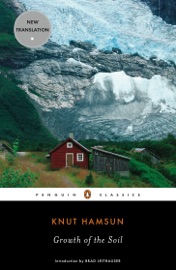
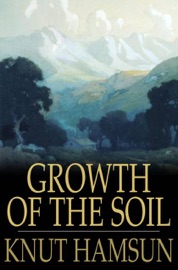
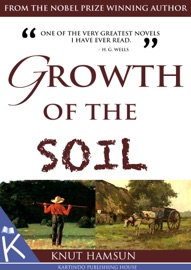
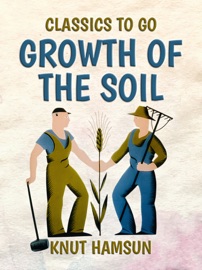
A man walks north into the uninhabited Norwegian backlands carrying his goods on his back, finds a stretch of moor and forest no one has claimed, and stops. Isak is taciturn, ox-strong, and patient past all reckoning; he builds a hut of turf, clears a patch of ground, and begins. In time the woman Inger comes to share the labour and the loneliness, and together they make a holding out of nothing — breaking the soil, raising crops and cattle, bearing children, and watching the wilderness fill in around them as other settlers follow the trail they have opened.
But Growth of the Soil is no smooth pastoral. Inger, in fear and shame, does a terrible thing and is taken to prison; copper is found in the hills and brings speculators, money, and a brief, destabilising boom; Isak's sons grow up pulled between the soil and the wider world of town, commerce, and America. Around the steady figure of Isak, forever clearing and ploughing and saying little, Hamsun sets a whole human comedy of greed, scandal, and change — and through it all the farm endures, because Isak endures.
Published in 1917 and crowned with the Nobel Prize in 1920, the novel is told in the plain, unhurried, saga-toned voice of a teller who has all the time in the world. The prose keeps the rhythm of agrarian labour itself, patient and grand, until the small repeated acts of a single farmer take on the scale of myth. Beneath its calm runs a sustained argument: the rooted, productive life of the soil set against the shallow, restless world of money — a hymn to endurance and to the man who simply stays and works the ground.
This edition presents the complete public-domain English translation by W. W. Worster, paired with an editor's foreword on the novel's composition, method, and place in Hamsun's career, a biographical note, a guide to further reading, and questions for reflection.






![Knut Hamsun's Collection [9 books]](https://is1-ssl.mzstatic.com/image/thumb/Publication/v4/9f/cd/44/9fcd44d9-5765-a18c-0b06-0da94b32eccf/CoverPage.jpg/270x270bb.jpg)