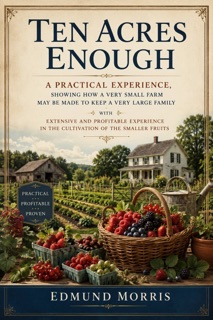
This book distinction: a pioneering 19th-century agricultural classic demonstrating how a very small farm—just ten acres—can sustain a family and generate reliable income through intensive cultivation, especially of small fruits and diversified market crops.
Ten Acres Enough presents a detailed, experience-based account of transforming limited land into a productive, self-sustaining farm system. Rather than advocating expansion, it demonstrates the power of efficiency, crop selection, and disciplined agricultural management.
Through practical observation and real-world results, Edmund Morris shows how careful planning, intensive labor organization, and the strategic cultivation of high-value crops can outperform large-scale, low-efficiency farming models.
Central to the book is the cultivation of small fruits and diversified produce, which together create a stable and profitable agricultural structure on minimal acreage. The narrative emphasizes not theory, but repeatable practice—what works in soil, in seasons, and in markets.
This is both a historical agricultural document and a timeless guide to small-scale productivity. Its insights remain relevant to modern readers interested in sustainable farming, homesteading, organic agriculture, and land-efficient food production systems.