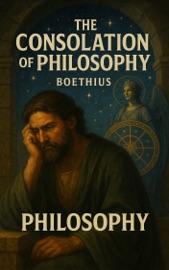
Boethius (c. 480–524 CE) was a Roman senator and consul who, accused of treason by the Ostrogothic king Theodoric, awaited execution in a prison at Pavia. There he composed the Consolation of Philosophy — a dialogue between himself and the personified figure of Philosophy, who comes to comfort him as he faces death.
For a thousand years it was one of the most read books in the Latin West — translated by King Alfred into Old English, by Chaucer into Middle English, by Queen Elizabeth I into Tudor English, and continuously in print since. The argument it makes about Fortune, providence, and the things that genuinely belong to us is one of the few works of philosophy that reads, even now, as a working consolation for the worst hours.