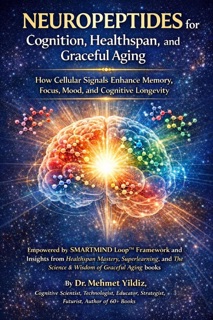
For decades, I have observed how conversations about brain health and cognitive function tend to follow a familiar pattern. New synthetic compounds emerge, early findings generate excitement, and before long, expectations begin to outpace evidence. Neuropeptides are now entering that cycle. I wrote this book to slow that process down and bring clarity.
In Neuropeptides for Cognition, Healthspan and Graceful Aging, I draw on decades of work in cognitive science, biochemistry, biotechnology, neurobiology, health technologies, and practical experimentation to examine how these signaling molecules influence memory, focus, mood, and long-term brain resilience. Rather than presenting peptides solely as solutions, I explain them as part of the body's internal communication system, one that governs how neurons interact, adapt, and respond to stress over time.
The central idea is simple, yet often overlooked. The brain does not function as a static structure. It operates as a dynamic network of signals. Neuropeptides contribute to that network by shaping synaptic plasticity, modulating neurotransmitter activity, influencing mitochondrial function, and regulating inflammatory responses. These processes are directly linked to how we think, learn, and age.
In this book, I examine both well-known and emerging compounds, including Semax, Selank, Dihexa, Cerebrolysin, BPC-157, GLP1-RAs, and Epitalon, as well as naturally occurring regulators such as IGF-1, oxytocin, GABA, orexin, vasopressin, NAD+, and more. I explain how they relate to core mechanisms like neuroplasticity, synaptogenesis, metabolic efficiency, and cognitive decline.
At the same time, I address a gap that has become increasingly visible. Much of the current discussion around peptides is driven by enthusiasm, selective interpretation of early studies, and a growing commercial market. Important questions about evidence, safety, sourcing, and appropriate use are overlooked. In some cases, peptides are introduced before foundational aspects of health, such as sleep, nutrition, and metabolic stability, are adequately addressed.
This book offers a more disciplined perspective. I examine what is supported by current research, what remains uncertain, and where caution is warranted. I discuss the practical realities of peptide use, including variability in product quality, the importance of medical supervision, and the limitations of translating experimental findings into everyday practice.
Throughout the book, I return to a central principle that has guided my work. Biological systems respond most effectively when their internal signals are coherent and well-supported. Peptides may influence these signals, but they do not replace the conditions required for them to function properly. Understanding this distinction is essential for making informed decisions.
This is not a book about shortcuts or quick results. It is a guide for readers who want to understand how the brain works at a deeper level, how emerging interventions fit within that system, and how to approach them with clarity, balance, and respect for the complexity of human biology.
If you are seeking practical insight grounded in science, experience, and methodical observation, this book might offer you valuable insights and inspiration.



![Substack Mastery for Busy Writers [Concise Version]](https://is1-ssl.mzstatic.com/image/thumb/Publication211/v4/a0/43/35/a043359b-c502-3cdd-e579-6931e6e5de42/0002328383.jpg/270x270bb.jpg)