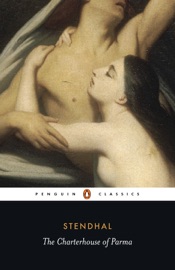
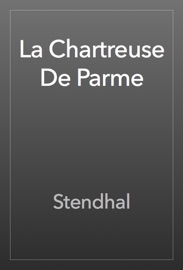
"In the shadows of a miniature court, a young man searches for glory—and finds a sublime, dangerous love."
Follow the idealistic and impulsive Fabrice del Dongo as he rushes to join Napoleon's army, witnessing the chaos of the Battle of Waterloo without ever quite understanding what he is seeing. This early taste of "heroic reality" sets the stage for his return to Italy, where he becomes a pawn in the sophisticated power games of the Court of Parma. Guided by his brilliant and daring aunt, the Duchess Sanseverina, and her lover, the master-politician Count Mosca, Fabrice must navigate a world of secret police, high-stakes imprisonment, and a forbidden passion for the jailer's daughter, Clelia Conti. Stendhal weaves a rich tapestry of irony and romance, proving that the battles of the heart are just as treacherous as those on the field of war.
The "Modern" View of War: Stendhal's depiction of Waterloo is legendary for its realism. Instead of a panoramic view of a great general's victory, we see through the eyes of a confused young man who can't tell if he's in a battle or a riot. This "soldier's-eye view" influenced generations of writers, including Tolstoy.
The Chessboard of Parma: The novel is a masterclass in political satire. The tiny Duchy of Parma is a microcosm of power, where a misplaced word or a secret letter can mean the difference between life and death. The relationship between the Duchess and Count Mosca is one of literature's most mature and fascinating portrayals of love entangled with political survival.
Why It Is a Literary Triumph: The Charterhouse of Parma is beloved for its "Stendhalian" energy—a mix of cynicism about the world and an unshakeable belief in the beauty of passion. It captures the spirit of an age where the grandeur of the Napoleonic era was fading into the complex, clockwork diplomacy of the Restoration.
Enter a world of high-stakes romance. Purchase "The Charterhouse of Parma" today.



![100 Eternal Masterpieces of Literature [volume 2]](https://is1-ssl.mzstatic.com/image/thumb/Publication118/v4/9f/8c/5e/9f8c5e70-32ca-fcc5-dbfb-eb220e68b887/9789897780028.jpg/270x270bb.jpg)































![Stendhal: The Complete Novels and Novellas [newly updated] (Book House Publishing)](https://is1-ssl.mzstatic.com/image/thumb/Publication111/v4/fd/f7/a0/fdf7a022-7156-ee55-dfb6-34c1bd97abe9/Stendhal_The_Complete_Novels.jpg/270x270bb.jpg)