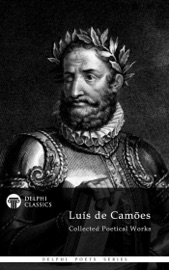
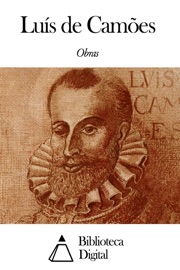
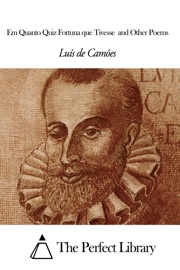
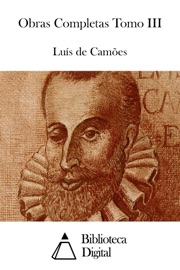
The most pleasing literary labour of my life has been to translate “The Lusiads.” One of my highest aims has been to produce a translation which shall associate my name, not unpleasantly, with that of “my master, Camoens.”
Those who favour me by reading this version are spared the long recital of why, how, and when Portugal’s Maro became to me the perfection of a traveller’s study. The first and chiefest charm was, doubtless, that of the Man. A wayfarer and voyager from his youth; a soldier, somewhat turbulent withal, wounded and blamed for his wounds; a moralist, a humourist, a satirist, and, consequently, no favourite with King Demos; a reverent and religious spirit after his own fashion (somewhat “Renaissance,” poetic, and Pagan), by no means after the fashion of others; an outspoken, truth-telling, lucre-despising writer; a public servant whose motto was,—strange to say,—Honour, not Honours; a doughty Sword and yet doughtier Pen; a type of the chivalrous age; a patriot of the purest water, so jealous of his Country’s good fame that nothing would satisfy him but to see the world bow before her perfections; a genius, the first and foremost of his day, who died in the direst poverty and distress; such in merest outline was the Man, and such was the Life which won the fondest and liveliest sympathies of the translator.
Mickle expresses the sentiment with more brevity and equal point: None but a poet can translate a poet; and Coleridge assigns to a poet the property of explaining a poet. Let me add that none but a traveller can do justice to a traveller. And it so happens that most of my wanderings have unconsciously formed a running and realistic commentary upon “The Lusiads.” I have not only visited almost every place named in the Epos of Commerce, in many I have spent months and even years. The Arch-poet of Portugal paints from the life, he has also the insight which we call introvision; he sees with exact eyes where others are purblind or blind. Only they who have personally studied the originals of his pictures can appreciate their perfect combination of fidelity and realism with Fancy and Idealism. Here it is that the traveller-translator may do good service with his specialty.
Again, like Boccaccio, Camoens reflects the Lux ex Oriente. There is a perfume of the East in everything he writes of the East: we find in his song much of its havock and all its splendour. Oriental-like, he delights in the Pathetic Fallacy; to lavish upon inanimates the attributes of animate sensation. Here again, the student of things Eastern, the “practical Orientalist,” may be useful by drawing attention to points which escape the European, however learned.
There are many translators of Camoens yet to come. We are an ephemeral race, each one struggling to trample down his elder brother, like the Simoniacal Popes in the Malebolge-pit. My first excuse for adding to the half-dozen translations in the field, must be my long studies, geographical and anthropological: I can at least spare future writers the pains and penalties of saddling the exactest of poets with bad ethnology and worse topography. These may be small matters, but in local colouring every touch tells.
My chief qualifications for the task, however, are a thorough appreciation of the Poem and a hearty admiration for the Poet whom I learned to love in proportion as I learned to know him. His Lusiads has been described as une lecture saine et fortifiante. I would say far more. The Singer’s gracious and noble thoughts are reviving as the champagne-air of the mountain-top.
And with this love and sympathy of mine mingles not a little gratitude. During how many hopeless days and sleepless nights Camoens was my companion, my consoler, my friend;—on board raft and canoe; sailer and steamer; on the camel and the mule; under the tent and the jungle-tree; upon the fire-peak and the snow-peak; on the Prairie, the Campo, the Steppe, the Desert!
Where no conversable being can be found within a march of months; and when the hot blood of youth courses through the brain, Ennui and Nostalgia are readily bred, while both are fatal to the Explorer’s full success. And, preferring to all softer lines the hard life of Discovery-travel:—
Where things that own not man’s dominion dwell,
Where foot of mortal man hath never been;—
a career which combines cultivation and education with that resistless charm, that poetry-passion of the Unknown; whose joy of mere motion lightens all sorrows and disappointments; which aids, by commune with Nature, the proper study of Mankind; which enlarges the mental view as the hill-head broadens the horizon; which made Julian a saint, Khizr a prophet, and Odin a god: this Reiselust, I say, being my ruling passion, compelled me to seek a talisman against homesickness and the nervous troubles which learned men call Phrenalgia and Autophobia.
I found this talisman in Camoens.
And, if it be true that by virtue of his perfect affection and veneration for Homer, whom he loved as a second self, Chapman was enabled to reflect a something of the old Greek’s magic force and fire, I also may be permitted to hope that complete sympathy with my Poet will enable me to present the public with a copy not unworthy of Camoens’ immortal work.
After all, to speak without undue modesty, my most cogent reason for printing this translation of my Master is, simply because I prefer it to all that have appeared. Others will think otherwise; and there is a Judge from whose sentence lies no present appeal. I have spared no labour on the work; I have satisfied myself if not Malebouche; and I repeat my motto:poco spero, nulla chiedo. If a concurrence of adverse trifles prevent my being appreciated now, the day will come, haply somewhat late, when men will praise what they now pass by.