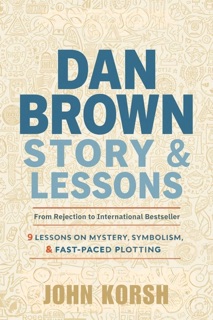
There's something magical about a story that keeps you up at night, your hands trembling as you turn the pages, unable to stop even though you desperately need sleep. There's something equally magical about the person who writes that story, especially if that person spent years being told their work wasn't good enough, wasn't marketable, wasn't what the industry wanted to see.
Dan Brown knows this magic intimately. Before he became one of the most successful authors in modern history, he was a struggling writer, a music teacher, a person whose novels were rejected repeatedly by publishers who couldn't quite see what millions of readers would eventually see. His journey from obscurity to becoming a household name isn't just a story about luck or timing – it's a masterclass in understanding what readers crave, in crafting narratives that burrow into the mind and refuse to leave, and in maintaining your vision even when the world seems determined to dismiss it.
When The Da Vinci Code exploded onto the literary scene in 2003, it didn't just become a bestseller. It became a cultural phenomenon. People stood in line at midnight to buy it. Book clubs debated its contents passionately. Religious figures condemned it. Universities held seminars about its themes. A book about art history, symbolism, and religious conspiracy became something rarely achieved in modern publishing – genuinely, unavoidably inescapable.
But here's what most people don't realize: this success wasn't accidental. It wasn't just the right book at the right time. It was the culmination of years of craft development, of learning what works and what doesn't, of understanding the fundamental mechanisms that make a reader's heart race and keep them invested until the final page.
Grab a copy of yours now!





![9 Lessons I Learned From Rebecca Yarros - About Creativity, Voice, and Storytelling [Personal Reflection]](https://is1-ssl.mzstatic.com/image/thumb/Publication221/v4/09/54/48/09544821-23a3-41e0-653f-83ea5de12a2a/cover.png/270x270bb.jpg)


![9 Lessons I Learned From Yuval Noah Harari - About Human History, Technology, and Human Destiny [Personal Reflection]](https://is1-ssl.mzstatic.com/image/thumb/Publication211/v4/c5/b5/f7/c5b5f770-989f-5c6c-002c-8c11ac09228f/yuval.png/270x270bb.jpg)


![9 PRINCIPLES FROM THE DISCIPLINED TRADER BY MARK DOUGLAS THAT I LEARNED - Developing Winning Attitudes [Personal Reflection]](https://is1-ssl.mzstatic.com/image/thumb/Publication221/v4/a2/f0/50/a2f0503b-26bf-e787-0c00-54897313a74d/cover.png/270x270bb.jpg)